
If you’re a small business owner, chances are you already know you should be on social media. You’ve probably even posted a few times — a photo of your product here, a quick update there. But if you’re not seeing real results, the problem isn’t social media. The problem is the lack of a strategy behind it.
The businesses that grow on social media aren’t the ones that post the most. They’re the ones that post with purpose. In this post we’re going to break down exactly what a social media strategy looks like for a small business — and how you can build one without a big budget or a marketing degree.
Why Random Posting Doesn’t Work

Most small businesses approach social media the same way — they post when they remember to, share whatever feels relevant at the time, and then wonder why their follower count isn’t moving.
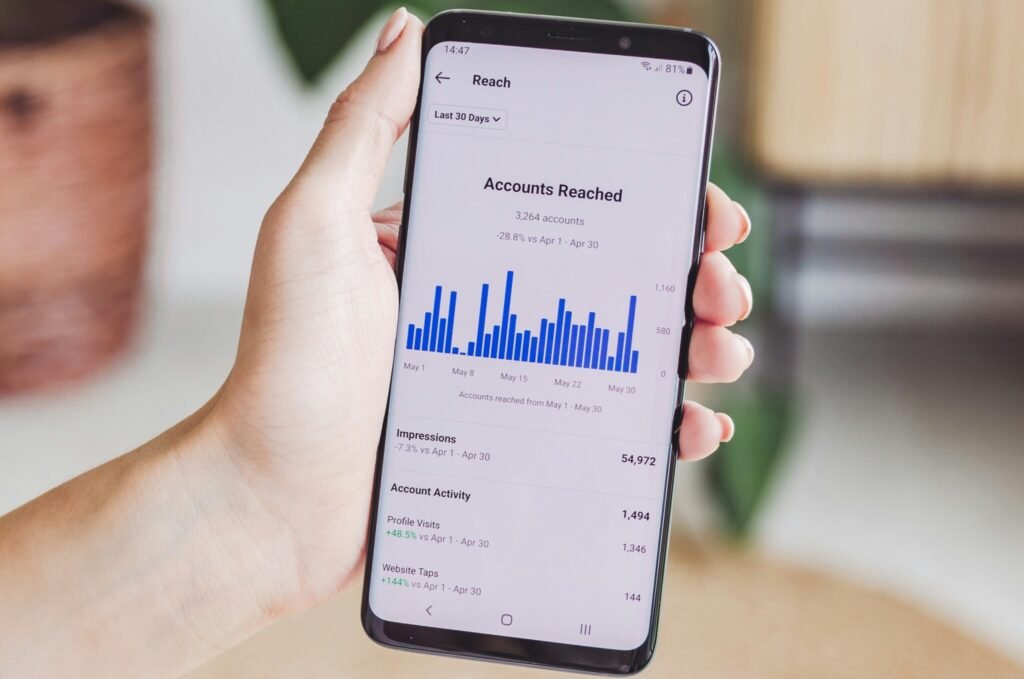
The truth is, social media platforms are designed to reward consistency and relevance. When you post sporadically with no clear theme or purpose, the algorithm has no idea who to show your content to. Your posts get buried, your reach stays low, and it feels like you’re shouting into the void.
A strategy fixes this. It tells the algorithm exactly who you are, what you do and who you’re talking to — and over time, it starts showing your content to exactly the right people.
Step 1 — Know Your Audience

Before you post a single thing, you need to know who you’re talking to. Not just “anyone who might buy from me” — actually specific. What age are they? Where do they live? What do they care about? What problems do they have that your business solves?
The more specific you get, the better your content will perform. A coffee shop in East London targeting young professionals has a very different audience to a family-run restaurant in Surrey. Same platform, completely different content strategy.
Write down three sentences describing your ideal customer. That person should be in the back of your mind every single time you create content.
Step 2 — Choose the Right Platforms
You don’t need to be everywhere. In fact, trying to maintain a presence on every platform at once is one of the most common mistakes small businesses make — it spreads your effort too thin and none of your accounts get the attention they deserve.
Start with one or two platforms where your audience actually spends time. For most small businesses targeting a consumer audience, Instagram and TikTok are the strongest options right now. If you’re more B2B, LinkedIn is worth prioritising. Facebook still has reach, particularly for local businesses targeting an older demographic.
Pick the platforms that make sense for your business and do them well. You can always expand later.
Step 3 — Build a Content Plan

A content plan doesn’t have to be complicated. At its simplest, it’s just a decision about what you’re going to post, how often, and what each post is trying to achieve.
A good rule of thumb for small businesses is the 3-1-1 rule — for every five posts, three should educate or entertain your audience, one should showcase your product or service, and one should be a direct call to action. This keeps your feed from feeling like one long advertisement while still driving people toward your business.
Plan your content at least two weeks ahead. Even just knowing the topic of each post in advance makes a huge difference — it removes the last-minute panic and keeps your content consistent.
Step 4 — Show Up Consistently
Consistency beats perfection every time. It’s better to post three times a week reliably than to post every day for two weeks and then disappear for a month.
Pick a posting frequency you can actually maintain and stick to it. Start small if you need to — even two posts a week is enough to build momentum if the content is good and you show up regularly.
Set aside a specific time each week to create and schedule your content. Treat it like a meeting you can’t cancel.
Step 5 — Engage, Don’t Just Broadcast

Social media is not a one-way channel. The businesses that grow fastest are the ones that treat it like a conversation — replying to comments, responding to messages, engaging with other accounts in their niche.
Spend at least 15 minutes a day engaging with your community. Like and reply to comments on your posts. Comment thoughtfully on posts from accounts your ideal customers follow. The more active you are, the more visibility you’ll get.
The Bottom Line
A social media strategy doesn’t have to be complex. But it does have to be intentional. Know your audience, choose the right platforms, plan your content, show up consistently and engage with your community. Do those five things well and you’ll be ahead of the vast majority of small businesses on social media.
If you’re not sure where to start — or you’d rather hand it over to someone who does this every day — that’s exactly what we’re here for.
At POV LDN we specialise in social media management for small businesses. From strategy to content creation, we handle everything so you can focus on running your business.
Book a free consultation